THE MOVE & MYTH REVIEW
Celeste
A platforming ascent that makes a small movement vocabulary expressive enough to carry both demanding challenges and a personal story.

Game facts
- Developer
- Maddy Makes Games Inc., Extremely OK Games, Ltd.
- Publisher
- Maddy Makes Games Inc.
- Released
- 25 January 2018
- Platforms
- Windows · macOS · Linux (Steam edition)
- Model
- Paid game
- PEGI
- 7 — Nintendo Switch edition; not a separate PC classification
- Players
- Single-player
- Length
- Short
- Difficulty
- 4 / 5 · Demanding
- Edition
- Base game (Steam)
Edition: Base game (Steam)
The score, explained
The interest and responsiveness of the core decisions and actions.
How progression, exploration and goals fit together.
The coherence of the visual, musical and narrative presentation.
How clearly the game explains its rules and offers useful ways to engage.
The depth of optional goals, alternative approaches and reasons to return.
A body against the mountain
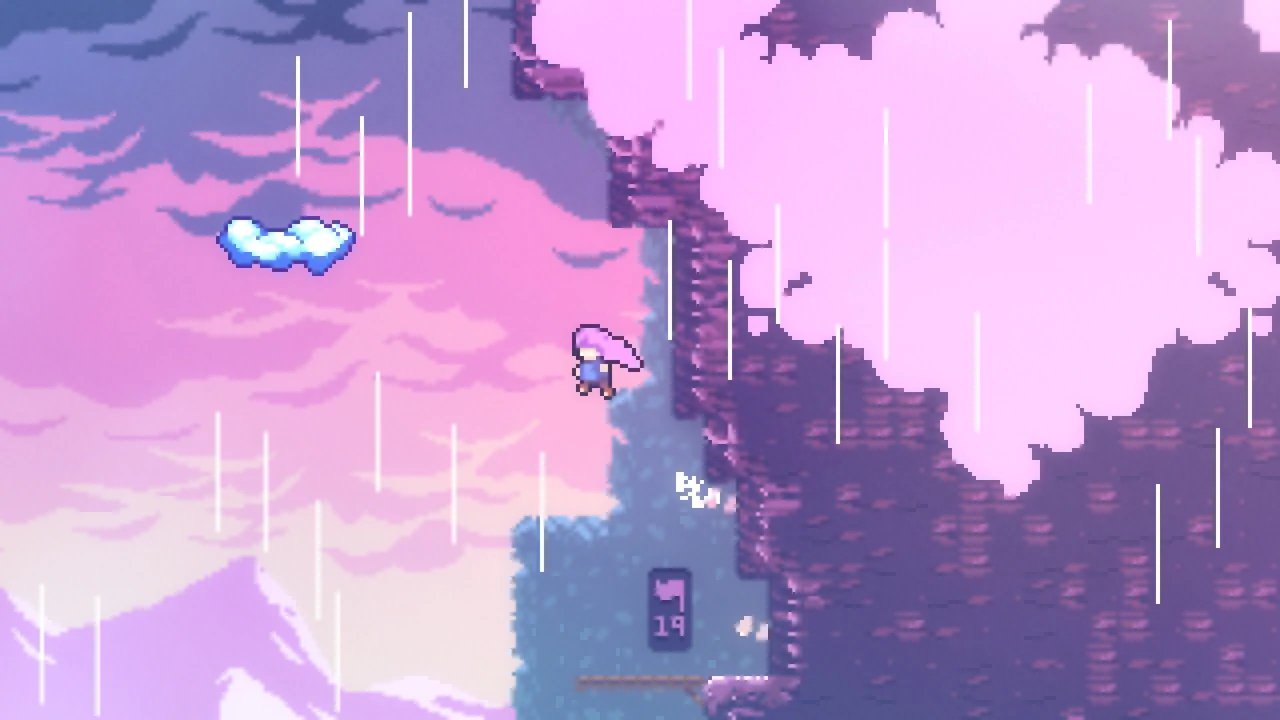
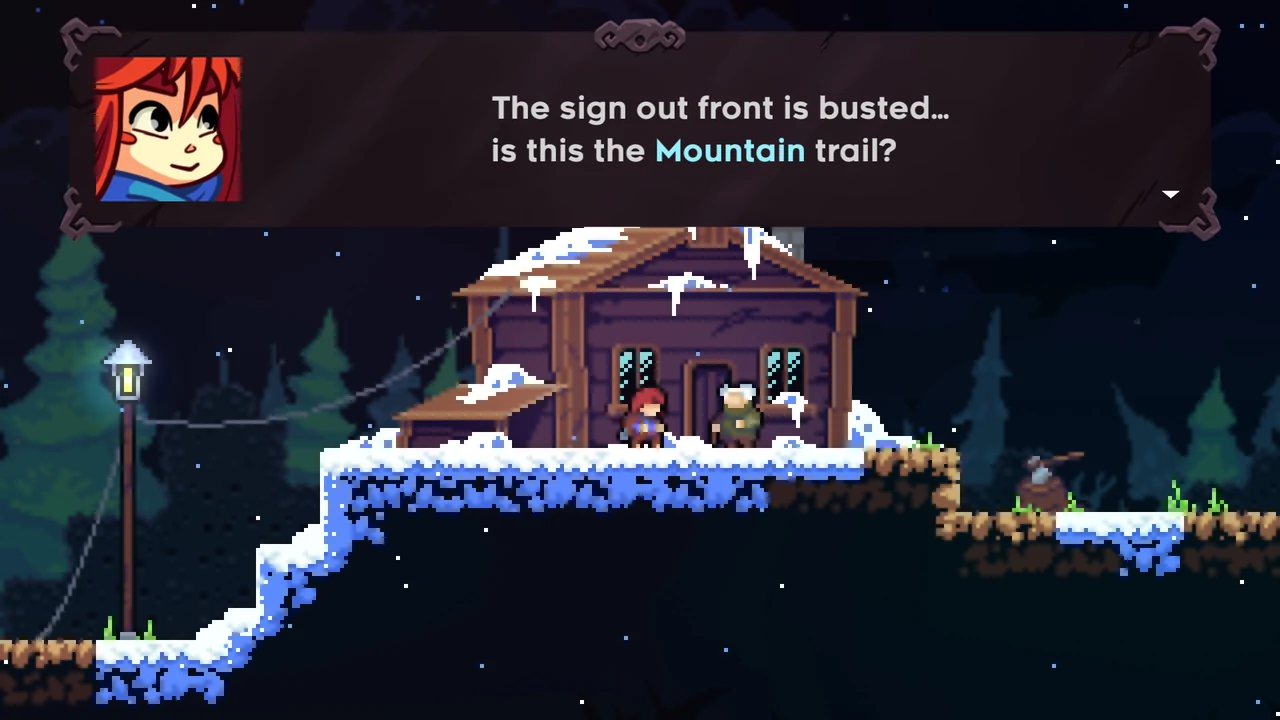
Celeste gives Madeline a jump, a climb and a dash, then uses the mountain to reveal how many different experiences those actions can produce. A wall can be a resting place, a source of momentum or the edge of a decision that must be made before stamina runs out. The rooms are compact enough to read, but their arrangements keep changing the relationship between intention and movement. Move & Myth values that physical clarity. The mountain is not simply a metaphor delivered through dialogue while an unrelated platformer happens underneath it. Its challenges make effort, hesitation and persistence part of the player's own activity. The story gives those experiences personal context, while the controls provide a practical language through which the climb can become something more specific than a sequence of obstacles to clear.
Make one action say more
The dash is simple to describe, yet its value depends on direction, timing and the surface that will become available afterwards. Chapter mechanics keep finding new contexts for that familiar commitment. Optional strawberries also provide a useful distinction between reaching the next room and exploring what the movement system can do within the current one. We rate the design highly because it makes improvement visible at a small scale. A different take-off point or a more deliberate sequence can change the result without requiring a completely new ability. The rapid return to the challenge keeps attention close to that discovery. Instead of spending a long approach thinking about the eventual difficult moment, the player can test the moment itself and gradually turn a route that seemed disconnected into a continuous, intelligible movement.
Precision is the activity
Celeste's warmth should not obscure how much of the experience involves trying a movement problem again. The short restart helps that process, but it does not make repetition enjoyable for everyone. Optional routes can demand a particularly high level of accuracy, and the concentrated main journey may still take very different shapes for players with different comfort levels. Assist Mode offers adjustments that deserve to be treated as legitimate tools for choosing the experience. The emotional story also touches on anxiety and self-understanding, so the game is not purely a cheerful athletic exercise. Our recommendation rests on the relationship between those elements. Choose it when you want movement to remain the central activity, while keeping the freedom to decide which demands are useful or enjoyable for you rather than assuming every additional challenge must be completed.
Find the sentence in the room
Choose Celeste if you enjoy connecting individual actions into a sequence that gradually becomes fluent. Before attempting a room at full speed, identify where a dash returns, where a wall can be used and which landing creates enough time to prepare the next movement. Those relationships make the route easier to understand than a collection of isolated jumps. Ori and the Will of the Wisps offers a more flowing relationship between movement and a larger landscape, while Celeste concentrates the question into small, precise rooms. It is especially suitable for players who want their improvement to be easy to locate. The satisfying moment is often not a dramatic leap to a new level of skill, but the discovery that several movements now belong together and can be performed with a clearer intention than before.
The verdict
A platforming ascent that makes a small movement vocabulary expressive enough to carry both demanding challenges and a personal story.
Reasons to play
- Movement rules develop through carefully arranged rooms
- Fast restarts preserve the focus of practice
- Assist settings make the physical demands adjustable
Reasons to think twice
- Precision remains central to the main route
- Optional challenges ask for much tighter execution
See the game
Assist & accessibility
Explore the available settings and control options on the official game page before choosing your setup.
Parents’ guide
Players: Single-player. No in-game purchase marker in the checked Steam listing. Separate downloadable content may be sold.
Age classification: 7. Nintendo Switch edition; not a separate PC classification
Official sources
Reviewed: November 2026
You might also like
 Sekiro: Shadows Die Twice - GOTY EditionRead review →
 SifuRead review →
 HadesRead review →