THE MOVE & MYTH REVIEW
Katana ZERO
A sharp action thriller that makes a room feel like a sequence to edit, then connects those rehearsed movements to an increasingly unstable narrative.
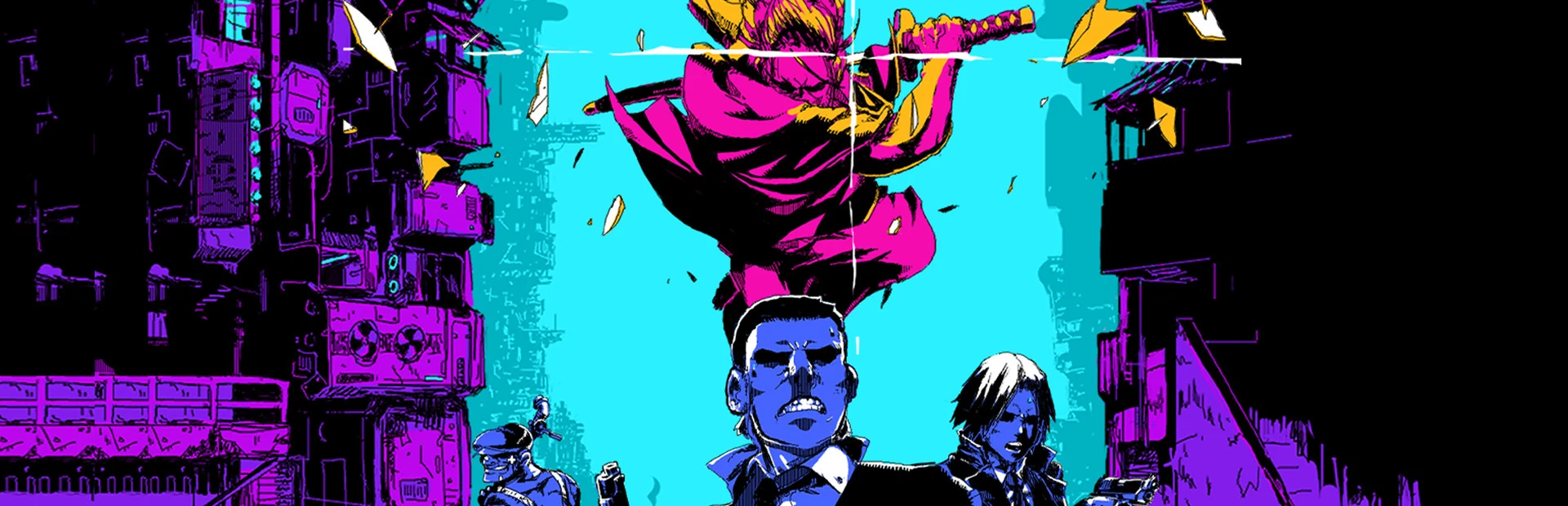
Game facts
- Developer
- Askiisoft
- Publisher
- Devolver Digital
- Released
- 18 April 2019
- Platforms
- Windows · macOS (Steam edition)
- Model
- Paid game
- PEGI
- 16 — Nintendo Switch download edition; not a separate PC classification
- Players
- Single-player
- Length
- Short
- Difficulty
- 4 / 5 · Demanding
- Edition
- Base game
Edition: Base game
The score, explained
The interest and responsiveness of the core decisions and actions.
How progression, exploration and goals fit together.
The coherence of the visual, musical and narrative presentation.
How clearly the game explains its rules and offers useful ways to engage.
The depth of optional goals, alternative approaches and reasons to return.
Rehearse the room
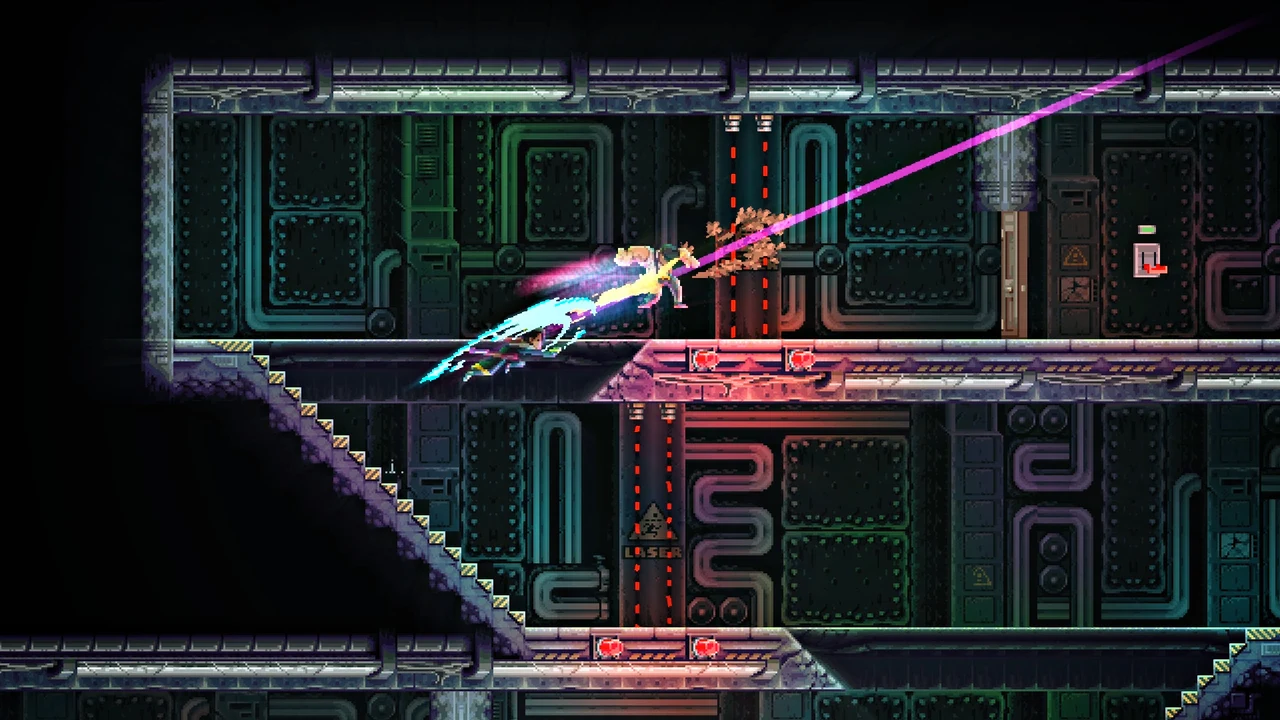
Katana ZERO turns a dangerous space into a short sequence of movements that can be attempted, reconsidered and attempted again. The sword, evasive actions and time-related abilities give the protagonist ways to cross a room, but the margin for error keeps each decision consequential. Enemies and environmental opportunities need to be read as parts of one sequence rather than handled as unrelated targets. Move & Myth values how that structure gives the action a distinctive narrative feeling. A room resembles a performance being worked out in advance, with failure becoming part of the process of discovering a viable version. The surrounding thriller reinforces that unstable relationship with time and certainty, making the practical act of revising a route feel connected to the larger question of how the protagonist understands the events taking place around him.
Make the transition clean
The strongest sequences connect actions so that one decision creates the conditions for the next. A well-timed movement can avoid a threat, change an enemy's position or create a useful opening without needing to stop the room's momentum. Rapid retries make it possible to test those connections while the mistake is still clear. The visual style and soundtrack then give a successful route a strong sense of cadence. We rate that relationship highly. The presentation does not simply congratulate the player after the difficult work is done; it helps the work feel like a continuous scene while it is happening. The action's small scale also keeps experimentation manageable. Instead of rebuilding a long campaign after every failure, the player can revise a specific transition and see whether the new version allows the rest of the room to unfold differently.
Lethality narrows the experience
The room structure depends on mistakes being costly and retries being frequent. That can make the action exhilarating, but it can also feel brittle when a small timing error removes an otherwise promising sequence. The narrative contains mature violence and psychological unease, so the stylish presentation should not be mistaken for a light arcade diversion. Players looking for extensive character building or open exploration will find a more directed experience. Its appeal lies in the connection between precise action and an authored thriller, not in providing a broad range of independent activities. Choose it when the process of refining a short scene sounds satisfying. If repeated local failure becomes irritating regardless of how quickly the next attempt begins, the game's clarity and momentum may not be enough to make its central rhythm enjoyable.
Work backwards from the dangerous moment
Choose Katana ZERO if you enjoy understanding why a sequence fails. Identify the enemy or transition that repeatedly breaks the route, then consider what earlier movement would leave the protagonist in a better position when that moment arrives. The answer may be a different order of actions rather than faster execution of the same order. Celeste offers a similarly compact relationship with repeated movement problems, but expresses it through platforming and a very different emotional register. Katana ZERO is the more violent, cinematic choice. It suits players who like a room to become a carefully arranged scene and who want the surrounding fiction to complicate the apparent certainty of that scene. A successful route feels satisfying because its actions now belong together, while the story keeps asking what that apparent control really means.
The verdict
A sharp action thriller that makes a room feel like a sequence to edit, then connects those rehearsed movements to an increasingly unstable narrative.
Reasons to play
- Short lethal encounters reward deliberate sequencing
- Immediate retries support experimentation
- Presentation gives the action a strong dramatic rhythm
Reasons to think twice
- One mistake can end a room
- Mature violence and narrative unease are central
See the game
Assist & accessibility
Explore the available settings and control options on the official game page before choosing your setup.
Parents’ guide
Players: Single-player. Check the current Steam listing for the base game and any separately sold downloadable content.
Age classification: 16. Nintendo Switch download edition; not a separate PC classification
Official sources
Reviewed: November 2026
You might also like
 Sekiro: Shadows Die Twice - GOTY EditionRead review →
 CelesteRead review →
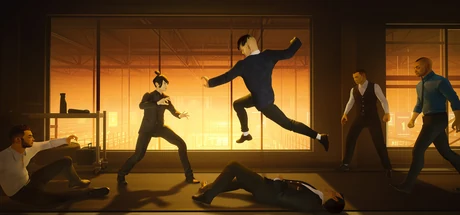 SifuRead review →